
Focus onMedico-Legal Issues

MD (Anaesthesiology) · Senior Consultant Anaesthesiologist, Seven Star Hospital & Rahate Surgical Hospital, Nagpur
Greetings from the Indian Society of Anaesthesiologists, Nagpur City Branch.
It is my pleasure to present another edition of e-sense, our e-newsletter, dedicated to the important theme of "Medico-Legal Issues in Anaesthesia Practice."
In today's healthcare environment, medico-legal awareness is as important as clinical expertise. Safe anaesthesia depends not only on knowledge and technical skills but also on effective communication, informed consent, accurate documentation, ethical practice, and patient-centred care. Staying updated in these areas helps us provide safer care while protecting both our patients and our profession.
I congratulate all the authors and the editorial team for their valuable contributions to this edition. I hope the articles will be informative, practical, and beneficial to every anaesthesiologist.
As we continue our journey under the theme "Anaesthesiologist – Green Minds Behind Masks," let us strive for excellence with responsibility, compassion, and sustainability. Let us also remain committed to our mission, "Safe Anaesthesia – Right of Every Mother and Child," ensuring that every patient receives the safest possible care.
Wishing you happy reading.
From TheEditor's Desk
Dear members,
Every successful surgery has two silent guardians—the surgeon and the anaesthesiologist. While the surgeon's work is often visible, the anaesthesiologist's contribution remains largely behind the scenes, where vigilance, judgment, and timely intervention determine patient safety. Today, however, excellence in anaesthesia extends far beyond pharmacology, physiology, and technical expertise. It also demands a sound understanding of the medico-legal landscape that increasingly shapes everyday clinical practice.
It is therefore fitting that the fourth and final edition of e Sence for the academic year 2025–26 explores one of the most relevant and thought-provoking themes in modern anaesthesiology—Medico-Legal Aspects in Anaesthesia.
Medicine has always been built on trust, but healthcare today functions in an environment of heightened patient awareness, digital information, social media scrutiny, and evolving legal expectations. Every preoperative evaluation, informed consent, monitoring chart, anaesthesia record, postoperative visit, and communication with patients and relatives has both clinical and legal significance. While litigation remains relatively uncommon compared to the millions of anaesthetic procedures performed safely every year, the consequences of preventable errors, inadequate documentation, or communication gaps can be profound for both patients and healthcare professionals.
This edition brings together three insightful articles that examine medico-legal challenges from different yet interconnected perspectives.
The opening article, "Defensive Anaesthesia: Myth or Necessity?", explores a question that many practitioners quietly ask themselves. Is defensive medicine merely a reaction to fear of litigation, or has it become an essential strategy for ensuring patient safety? The article thoughtfully differentiates between unnecessary defensive practices that increase healthcare costs and evidence-based precautions that improve outcomes. It reminds us that true protection lies not in avoiding responsibility, but in practising safe, ethical, guideline-based medicine supported by meticulous documentation and effective communication.
The second article, "Can an Anaesthesiologist Refuse a Case? Ethical and Legal Perspectives," addresses one of the most challenging dilemmas faced in clinical practice. Anaesthesiologists frequently encounter patients with inadequate optimisation, unavailable resources, incomplete investigations, or circumstances that compromise safety. Balancing professional duty with patient welfare requires both ethical sensitivity and legal awareness. The discussion reinforces an important principle: refusing an unsafe case is not necessarily a refusal of care—it may instead represent responsible advocacy for patient safety when accompanied by appropriate communication, documentation, and efforts to facilitate safe management.
The final scientific article, "Operation Theatre Disasters: Who Is Legally Responsible?", examines one of the most complex areas of healthcare law. Adverse events in the operating theatre rarely result from a single individual's actions. Instead, they often reflect failures in systems, teamwork, communication, equipment, institutional processes, or human factors. Understanding shared responsibility, maintaining comprehensive documentation, adhering to standard operating procedures, and fostering a culture of transparency are essential not only for legal protection but also for preventing future harm. The article reminds us that patient safety is fundamentally a collective responsibility.
Collectively, these contributions convey a powerful message: the strongest medico-legal defence is good clinical practice. No consent form can compensate for poor communication, no legal argument can replace inadequate documentation, and no defensive strategy can substitute for sound clinical judgment. Competence, compassion, teamwork, continuous learning, adherence to professional guidelines, and honest communication remain the cornerstones of safe anaesthesia practice.
As we conclude the 2025–26 journey of e Sence, it is also an opportunity to reflect on the purpose of this newsletter. Throughout the year, our aim has been to present topics that stimulate curiosity, encourage critical thinking, simplify complex concepts, and promote evidence-based practice among anaesthesiologists, postgraduate students, and healthcare professionals. Each edition has represented the collective enthusiasm, scholarship, and dedication of our editorial team, contributors and readers.
Let this final issue serve not merely as a discussion on medico-legal concerns, but as a reminder that law and ethics are not obstacles to good medical practice—they are its natural companions. When knowledge is combined with empathy, documentation with diligence, and science with professionalism, both patient safety and physician confidence are strengthened.
On behalf of the editorial team, thank you for being a part of the e Sence family throughout this memorable academic year. We hope this concluding edition informs, inspires, and encourages thoughtful reflection.
Happy reading, keep learning, and continue practising safe, ethical, and compassionate anaesthesia.

Dr. Gunjan Badwaik
Editor
Professor, Department of Anaesthesia, Datta Meghe Medical College, Nagpur

Dr. Shweta Ajay Bulle
Co-Editor
Executive Committee Member · Consultant Anesthesiologist, Indira IVF, Nagpur
eSenseArticles
 Defensive Anaesthesia: Myth or Necessity?MBBS DA, Senior Consultant Anaesthesiologist, National Cancer Institute JamthaRead Article
 Can an Anesthesiologist Refuse a Case? Ethical and Legal Aspects in IndiaMBBS,MD (Anaesthesiology)- Consultant Anaesthesiologist and Pain Specialist at National Cancer Institute,NagpuRead Article
 Operation Theatre Disasters: Who is Legally Responsible?MBBS, DA Anaesthesia ConsultantRead Article
ExploreMore
Latest CMEs
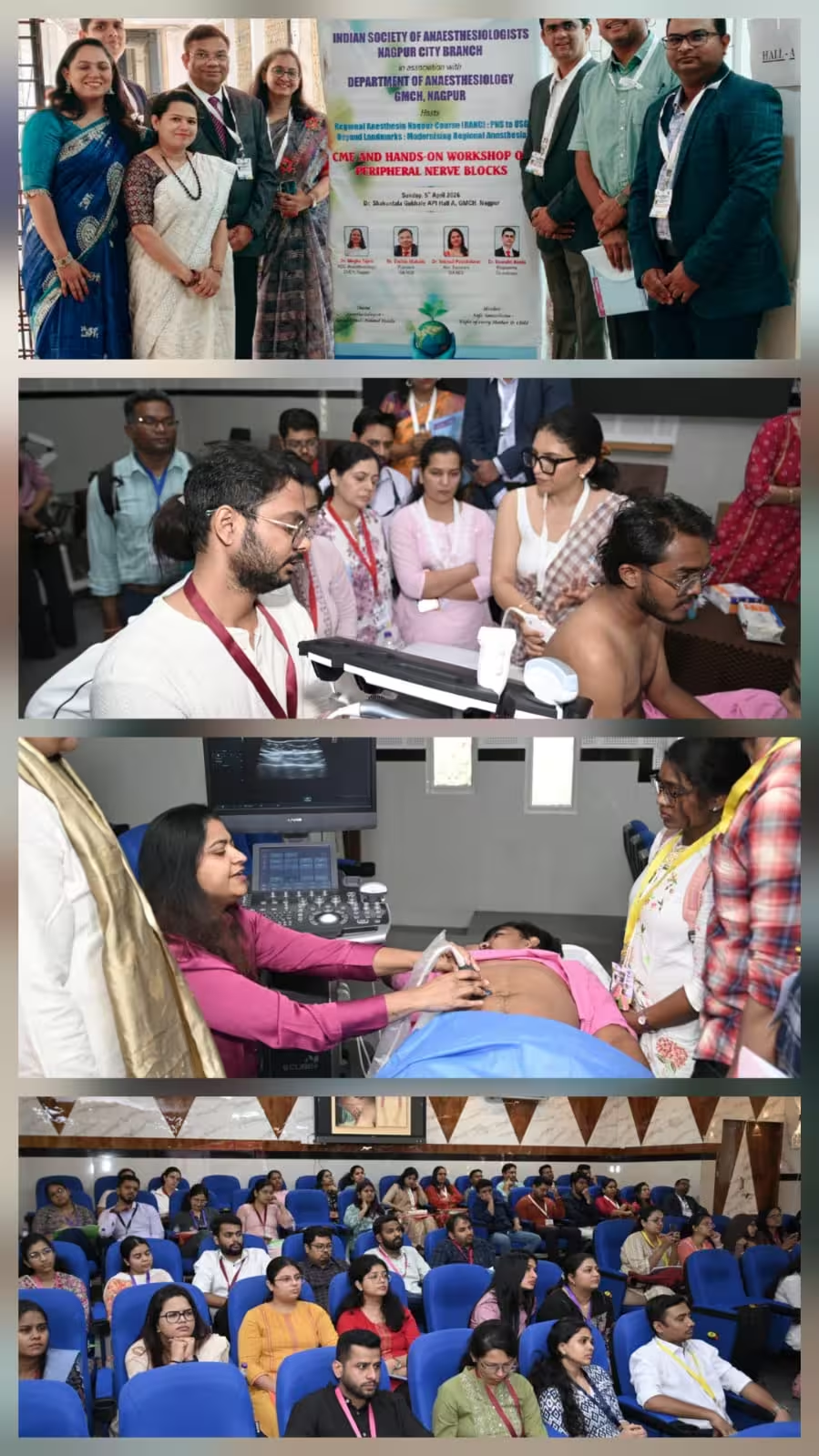 ISA–NCB Conducts CME & Hands-on Workshop on Modern Regional AnaesthesiaApril 7, 2026ISA–NCB and GMCH Nagpur organized a CME and hands-on workshop on peripheral regional nerve blocks, bringing together 104 delegates for expert-led scientific sessions and practical ultrasound-guided training.
 Obstetric CME: Navigating Complexities in Obstetric AnaesthesiaFebruary 12, 2026ISA NCB and Omega Hospitals hosted an Obstetric Anaesthesia CME in Nagpur featuring expert faculty, critical academic sessions, and the Dr. N. T. Balankhe Memorial Oration.
Latest Causes
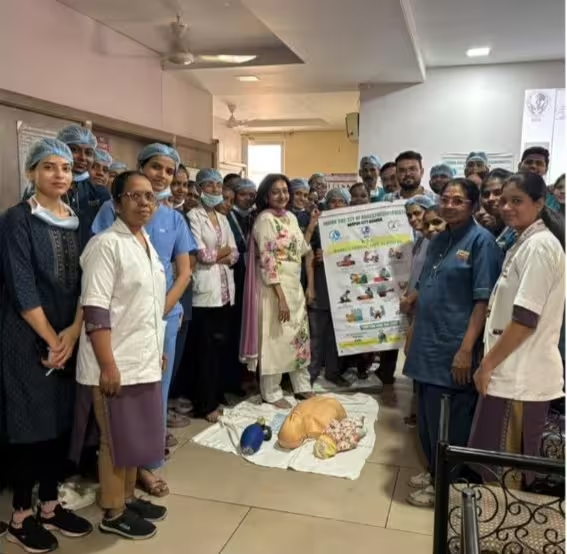 BCLS and COLS Training Program at Avanti Institute of Cardiology and HospitalJune 6, 2026ISA–NCB conducted BCLS and COLS training at Avanti Hospital, empowering staff and patient relatives with life-saving skills.
 BCLS and COLS Training Program at Netrakshi Eye Care Hospital, BhandaraJune 5, 2026ISA–NCB conducted BCLS and COLS training at Netrakshi Eye Care Hospital, benefiting staff and patients’ relatives.
Events & News
 ISA–NCB Conducts Practical Oriented Teaching Programme (POTC) 2026 for MD Anaesthesiology StudentsJune 24, 2026ISA–NCB organized its annual Practical Oriented Teaching Programme (POTC) 2026, equipping 60 postgraduate anaesthesiology students with practical knowledge and exam-oriented training from experienced faculty.
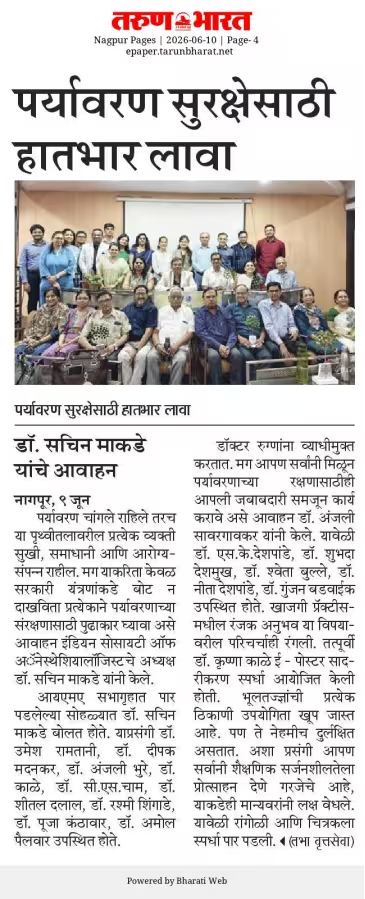 ISA–NCB Promotes Green Anaesthesia on World Environment DayJune 15, 2026ISA–NCB observed World Environment Day with an awareness lecture encouraging green anaesthesia practices and environmental responsibility among healthcare professionals and the wider community.